
Highland Park Village Buildings Set for Renovations
State filings confirm several buildings at the historic 1931 Highland Park Village shopping center are slated for structural and cosmetic renovation work.
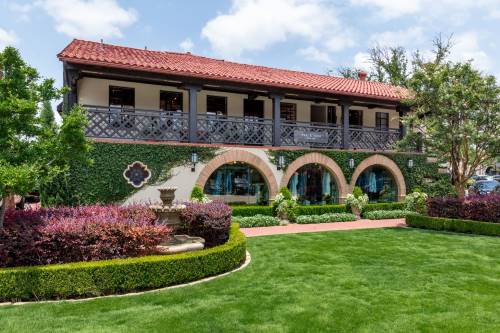
Renovation filings submitted to the Texas Department of Licensing and Regulation confirm that several buildings at Highland Park Village are headed for construction work, according to state records reviewed by Preston Hollow Press.
The 1931 shopping center, which sits at the corner of Mockingbird Lane and Preston Road, holds a designation on the National Register of Historic Places as one of the oldest continuously operating shopping centers in the United States. That status makes even routine work at the property a matter of wider civic interest, extending well beyond the Park Cities.
Filings in the TDLR database don’t specify which tenants are affected or whether storefronts will close temporarily. What the records do suggest is that the scope here goes beyond minor patching. The Texas Department of Licensing and Regulation requires formal filings for commercial construction above a certain cost threshold, so the Village’s appearance in those records means the project’s crossed that line. The TDLR database has become a standard early-warning system for construction activity across North Texas, regularly surfacing projects before ownership groups put out any public statement.
A spokesperson for Highland Park Village confirmed the renovation plans in 2026 but didn’t provide a timeline or budget figure. “We’re committed to preserving what makes the Village exceptional while meeting the needs of our tenants,” the spokesperson said.
The property is controlled by a family ownership group with generational ties to Dallas real estate, tracing back to the Flippen and Armstrong families who originally developed the center. That history has its practical consequences. The National Register designation shapes what can and can’t be touched on the Spanish Colonial Revival buildings that define the property’s appearance. Any work has to satisfy both the commercial demands of tenants like Chanel, Christian Louboutin, and Hermes and the preservation requirements that come with a historic designation. Threading that needle isn’t cheap or fast.
It’s worth considering the commercial pressure bearing down on the ownership group. Those aren’t brands that tolerate extended disruption to their retail environments. Whatever the construction calendar looks like, expect the renovation to be staged carefully to keep storefronts open as much as possible. Luxury retail can absorb a lot, but not an indefinite construction zone outside the front door.
The Village anchors the southern end of Preston Road, a stretch that runs north through Preston Center and ranks among the most commercially valuable corridors in the entire city. That’s not opinion. The concentration of high-net-worth households within a two-mile radius of Mockingbird Lane and Preston Road doesn’t have many peers in Dallas. The Village’s condition ripples outward. An extended construction presence affects foot traffic, affects neighboring property values, affects the overall character of that block.
Historic retail renovations of this caliber don’t come cheap. Projects at comparable properties across the country have routinely run into the millions, and the Spanish Colonial Revival architecture that gives the Village its identity requires skilled restoration work, not standard commercial contractors. The 04 filing with TDLR signals the project’s scale, even if the full budget hasn’t surfaced publicly.
What’s clear is that after nearly a century of continuous operation, the Village is due. The buildings opened in 1931 and haven’t stopped operating since. That’s the whole selling point. It’s also, eventually, a maintenance reality.